Planning a wedding in Marrakech often involves several specialists working around the same celebration.
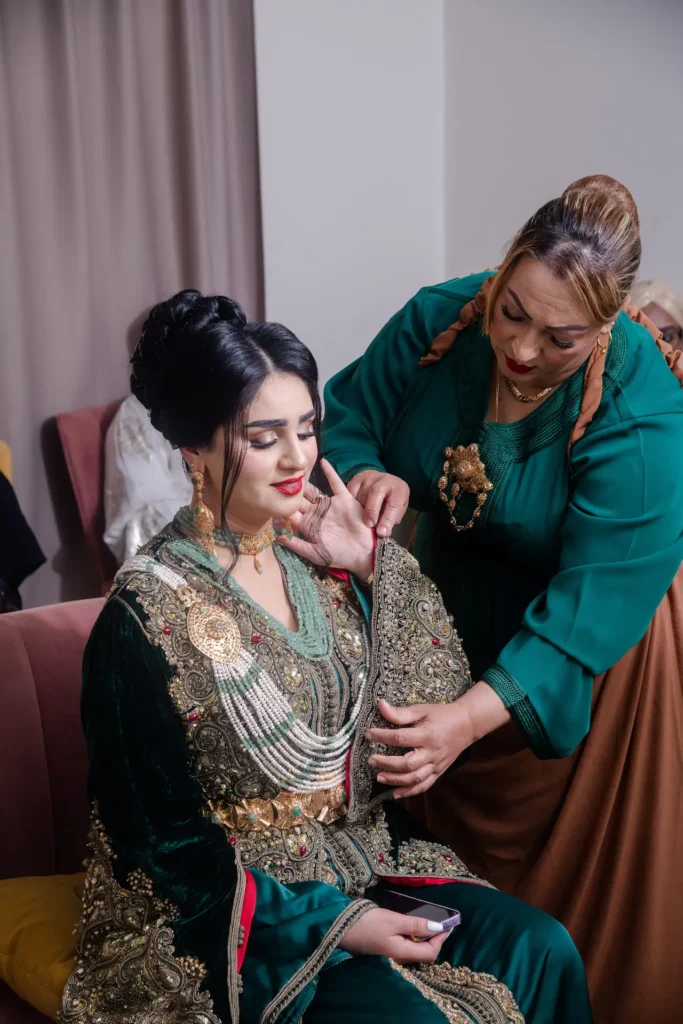
A wedding planner may be responsible for the overall production, venue, suppliers and schedule, while a Negafa or Moroccan bridal stylist focuses much more closely on the bride, her garments, jewellery, transformations and ceremonial presentation.
For couples organising a destination wedding in Marrakech, understanding the difference between these roles can make planning significantly easier.
The wedding planner and Negafa do not replace one another.
When the two teams communicate well, they complement each other.
What Does a Wedding Planner Do?
The exact responsibilities of a wedding planner depend on the planner and the services selected.
For a larger celebration, the planner may coordinate elements such as:
- Venue
- Catering
- Décor
- Flowers
- Entertainment
- Musicians
- Photography and video
- Guest transportation
- Accommodation logistics
- Wedding-day schedule
- Supplier coordination
- Production and technical requirements
The planner looks at the wedding as a whole.
Their responsibility is generally to connect the different suppliers and make sure the wider event develops according to the agreed plan.
For destination couples who are organising from abroad, the wedding planner may also become one of the main points of communication in Marrakech.
What Does a Negafa or Moroccan Bridal Stylist Do?
The Negafa works within a more specialised part of the wedding experience.
Her role traditionally centres around Moroccan bridal presentation and may include:
- Caftans and takchitas
- Bridal jewellery
- Belts and headpieces
- Different bridal looks
- Assistance during transformations
- Ceremonial preparation
- Traditional entrances
- Bridal accompaniment
International brides may initially describe this person as a Moroccan bridal stylist because the word Negafa is not familiar to everyone.
Our guide to the role of a Negafa in Moroccan bridal styling explains this tradition in greater detail.
The important distinction is that the Negafa works much more closely with the bride and her ceremonial presentation than the general wedding planner normally would.
Why Do the Wedding Planner and Negafa Need to Communicate?
The connection between the two teams becomes especially important around timing.
Imagine that the wedding planner has scheduled dinner, entertainment and an important entrance within a particular period.
At the same time, the bride needs to change her caftan, jewellery, belt and headpiece before that entrance.
If the planner does not know how much time the transformation requires, the schedule may become unrealistic.
Likewise, if the bridal styling team does not know when catering, entertainment or photography is scheduled, a bridal change could begin at the wrong moment.
Communication prevents these problems.
Bridal Changes Affect the Wedding Timeline
Moroccan weddings may include several bridal transformations.
Each one requires preparation.
Changing a bridal look can involve much more than simply replacing one dress with another.
The process may include:
- Removing jewellery
- Changing the garment
- Repositioning the belt
- Changing earrings or necklaces
- Adding or removing a headpiece
- Adjusting the hairstyle
- Checking the complete presentation
These moments need to be included within the Moroccan wedding timeline rather than treated as spontaneous interruptions.
The planner should understand approximately how long each transformation requires before the final schedule is confirmed.
Ceremonial Entrances Require Several Teams
Traditional Moroccan entrances are another area where coordination matters.
A ceremonial entrance may involve the couple, Negafa, musicians, wedding planner, photographers, videographers and other members of the production team.
Everyone needs to know approximately when the moment will happen.
The bride needs to be completely styled.
The musicians need to be prepared.
Photography and video teams need to be positioned.
The planner needs to ensure that another part of the wedding programme is not happening at the same time.
This is how a traditional moment becomes integrated naturally into the larger celebration.
The Planner Does Not Need to Become a Negafa
An international planner working in Marrakech does not need to become an expert in every Moroccan bridal tradition.
That is one of the reasons local specialists are valuable.
The planner can focus on the complete guest and event experience while the Negafa or Moroccan bridal styling team provides expertise around the bride and specific ceremonial elements.
Strong collaboration allows each professional to remain responsible for their own area while still understanding how their work affects the others.
The Negafa Does Not Replace the Wedding Planner
The opposite distinction is equally important.
A Negafa may have extensive experience with Moroccan weddings, but this does not automatically mean she is responsible for coordinating every supplier, managing guest transportation, designing the venue or controlling the complete wedding production.
Couples should understand what is actually included in each supplier’s services before assuming responsibilities overlap.
Clear roles reduce confusion.
This becomes increasingly important as the size and complexity of the wedding increase.
Coordination Before the Wedding Day
The best time for the planner and styling team to communicate is not during the wedding itself.
Important information should be exchanged beforehand.
This may include:
- Overall wedding timeline
- Bride preparation time
- Number of bridal looks
- Planned entrances
- Photography requirements
- Music cues
- Dinner timing
- Entertainment schedule
- Groom transformations
- Important family moments
The teams do not necessarily need endless meetings.
They simply need enough information to understand how their responsibilities intersect.
Wedding Planners Working With International Brides
An international bride may arrive in Marrakech knowing exactly what she wants from the venue and overall wedding design but knowing much less about Moroccan bridal traditions.
The wedding planner can help connect the couple with appropriate local specialists.
Once introduced, the Negafa or bridal stylist can then explain the possibilities around Moroccan garments, jewellery and ceremonial presentation.
This creates a much better experience than asking one supplier to answer questions outside their specialist area.
Couples can also review our guide on how to choose a bridal stylist or Negafa in Marrakech before beginning consultations.
Moroccan Bridal Styling Within a Contemporary Wedding
Working with a Negafa does not mean the entire wedding needs to follow a traditional Moroccan format.
A contemporary destination wedding can still include Moroccan bridal styling.
For example, a bride may wear an international wedding gown during one part of the celebration and later appear in a Moroccan caftan.
She may choose one ceremonial entrance rather than several.
Or the wedding may incorporate traditional jewellery and garments within otherwise contemporary event production.
Our guide to Moroccan bridal styling in Marrakech explores how these elements can be adapted around different brides and wedding concepts.
The wedding planner can then build those selected traditions into the wider event.
Coordinating Photography and Video
The photographer and videographer should also understand the relationship between the timeline and bridal styling.
If the bride will appear in several looks, the creative team may want photographs of each one.
If there is a ceremonial entrance, they need time to prepare.
If important jewellery or craftsmanship should be documented, detail photography may need to happen before the bride enters the reception.
The wedding planner can help protect these moments in the overall schedule while the bridal styling team ensures the bride is ready.
What About the Groom?
The same coordination can apply to groom styling.
A groom may move between Moroccan clothing and international formalwear during different parts of the wedding.
His changes should be considered alongside the bride’s appearances and the overall schedule.
A couple does not need to change simultaneously every time, but the planner should understand when both partners need preparation time.
Our guide to Moroccan groom styling in Marrakech explores how his presentation can complement the bride while remaining individual.
Coordinating a Henna Celebration
If the wedding programme includes a henna evening, the roles may overlap again.
The wedding planner might handle the venue, décor, catering and entertainment.
The Negafa or bridal styling team may prepare the bride’s garment, jewellery and presentation.
The result is one event created by several specialists.
For destination weddings, this collaborative structure is especially valuable because a henna ceremony in Marrakech may be unfamiliar to many of the guests and sometimes to members of the international planning team.
Local cultural knowledge helps the event feel intentional rather than decorative.
Questions Couples Should Ask Their Teams
Before confirming the wedding programme, couples can ask both the planner and bridal styling team a few simple questions.
For the planner:
- Who controls the final wedding timeline?
- When should bridal transformations happen?
- How will suppliers communicate on the wedding day?
- Who coordinates ceremonial entrances?
For the Negafa or bridal stylist:
- How much preparation time is required?
- How many transformations are realistic?
- Which ceremonies require specific styling?
- What does the bridal team need from the planner or venue?
These conversations can prevent misunderstandings later.
Wedding Planners Can Also Contact the Bridal Team Directly
Arouss Marrakech can work not only with couples but also with wedding professionals organising celebrations for their clients.
For planners managing destination or Moroccan weddings, early communication can help determine what bridal styling and ceremonial services are appropriate for the project.
This is particularly useful when the couple lives abroad and the planner is coordinating the local supplier network.
Providing the wedding date, venue, approximate schedule and styling requirements gives the bridal team enough context to begin the discussion.
One Wedding, Different Areas of Expertise
A beautifully organised wedding is rarely the work of one person.
The planner sees the complete event.
The Negafa or Moroccan bridal stylist focuses closely on the bride and her ceremonial presentation.
Photographers preserve the visual story.
Musicians create the atmosphere.
Other specialists contribute their own expertise.
The goal is not to blur these roles.
It is to make them work together.
At Arouss Marrakech, bridal styling and Negafa expertise can be integrated into the wider wedding production in collaboration with couples and professional wedding planners.
Explore our Experiences to discover the Maison’s wedding, bridal styling and ceremonial services.
View the Arouss Marrakech Gallery for selected bridal looks and wedding moments.