The bride may receive much of the visual attention at a Moroccan wedding, but the groom is equally part of the story.
Traditional Moroccan groom styling can introduce craftsmanship, heritage and ceremony into his presentation while still feeling appropriate for a contemporary wedding.
For couples planning a Moroccan wedding in Marrakech, thinking about the bride and groom together can also create much stronger photographs and ceremonial moments.
The objective is not necessarily for both partners to wear matching garments.
It is to create visual harmony while allowing each person to maintain an individual identity.
What Does a Moroccan Groom Wear?
There is no single outfit that every Moroccan groom must wear.
The choice can depend on family tradition, the formality of the wedding, the groom’s personal style and the type of ceremonies included.
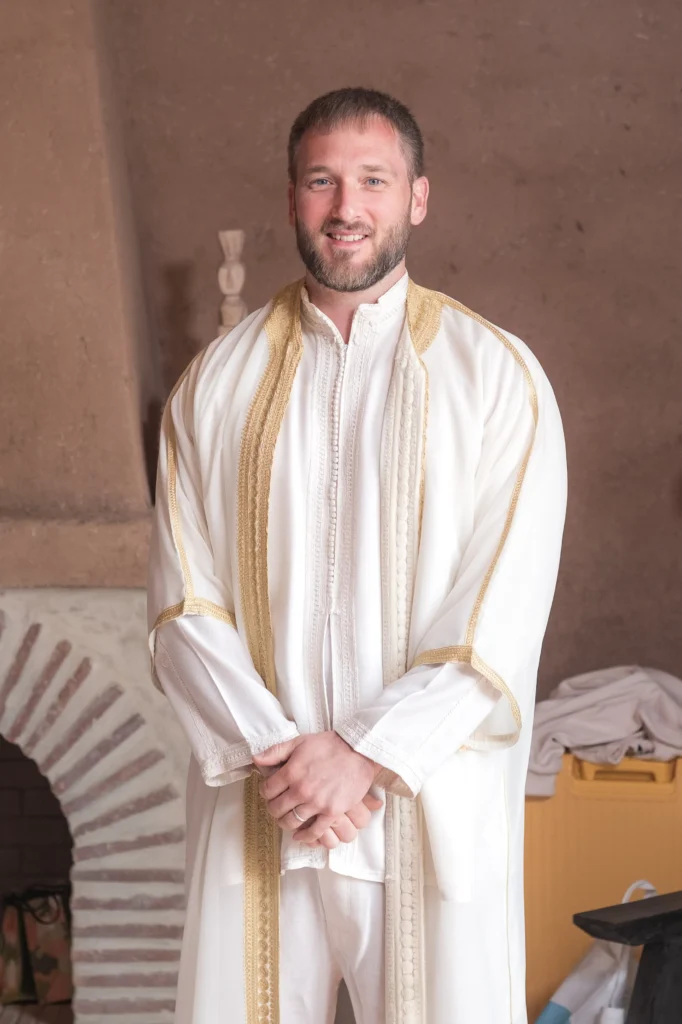
Traditional Moroccan groom styling may incorporate garments such as the jabador, djellaba or other formal Moroccan pieces depending on the desired presentation.
Some grooms choose Moroccan clothing for one part of the celebration before changing into a Western suit or tuxedo later.
Others prefer a stronger traditional presence throughout the wedding.
The important point is that the clothing should feel intentional rather than added simply because the celebration is taking place in Morocco.
Traditional Styling Can Still Feel Contemporary
Traditional Moroccan clothing does not need to create an old-fashioned appearance.
Fabric, tailoring, colour and detailing can completely change the character of a groom’s look.
A restrained palette and clean silhouette may create a highly contemporary interpretation.
Richer embroidery and stronger colour can produce a more ceremonial presentation.
The groom’s styling should reflect both the wedding atmosphere and his own personality.
Just as with Moroccan bridal styling in Marrakech, heritage provides the vocabulary, but the final interpretation can still feel personal.
Coordinating the Bride and Groom
One of the most important considerations is how both partners will appear together.
Coordination does not mean wearing exactly the same colour or embroidery.
Instead, the relationship can be created through:
- Complementary colours
- Similar levels of formality
- Related embroidery details
- Fabrics with compatible visual weight
- Shared traditional references
- Balanced accessories
For example, if the bride is wearing an elaborate ceremonial caftan with prominent jewellery, an extremely casual groom look may feel disconnected beside her.
The reverse can also happen.
Both looks should feel as though they belong to the same moment.
Think About the Bride’s Different Looks
Many Moroccan brides wear more than one look throughout the celebration.
The groom does not necessarily need to change every time the bride changes.
However, it is useful to understand the progression of her styling before deciding when his own transformations should happen.
Perhaps one traditional groom look is reserved for an important ceremonial entrance.
A suit may be used for another part of the evening.
Or the couple may begin in international formalwear before introducing Moroccan clothing later.
The schedule should make sense as a whole.
This is another reason bridal and groom styling should be discussed together rather than treated as two unrelated projects.
Colour Matters
Colour can create a subtle connection between the couple.
The groom’s garment may incorporate a tone found in the bride’s caftan, belt or embroidery.
Alternatively, both looks may use different colours but remain connected through neutral tones or metallic detailing.
There is no requirement for perfect matching.
In fact, overly matching the couple can sometimes make the styling feel less sophisticated.
A more refined approach is usually to look for harmony.
Groom Styling for Ceremonial Entrances
Certain moments of a Moroccan wedding naturally place the couple at the centre of attention.
Traditional entrances are one example.
During these moments, clothing becomes part of the ceremony itself.
The groom’s presentation therefore deserves the same consideration as the bride’s.
Garments should allow comfortable movement while still creating the required level of formality and visual presence.
If the entrance involves music, photography or other ceremonial elements, the couple’s styling should already be prepared before the moment begins.
Our guide to Moroccan wedding traditions in Marrakech explores how these elements can form part of the wider celebration.
Styling the Groom for Photography
Wedding photographs often reveal whether the couple’s styling was considered together.
A bride may be wearing intricate Moroccan craftsmanship, jewellery and ceremonial accessories.
If the groom’s clothing has been selected independently without considering those elements, the difference can become particularly noticeable in portraits.
Good couple styling considers:
- Silhouette
- Colour
- Formality
- Texture
- Jewellery and accessories
- The wedding setting
This does not mean removing individuality.
It simply means considering how both people will appear within the same frame.
Moroccan and Western Looks in the Same Wedding
Modern Moroccan weddings increasingly allow couples to move naturally between different styles.
A groom may wear a tuxedo or formal suit during one part of the wedding and traditional Moroccan clothing during another.
The bride may similarly combine an international wedding gown with Moroccan caftans or takchitas.
This can be especially appropriate for couples whose families come from different cultural backgrounds.
Rather than choosing between Moroccan and international traditions, the wedding can give both identities their own moments.
The key is planning the sequence carefully.
Groom Styling for Destination Weddings
International couples planning a destination wedding in Marrakech may be particularly interested in introducing Moroccan clothing into the groom’s presentation.
For someone wearing traditional Moroccan clothing for the first time, guidance can be useful.
The garment should feel comfortable and natural rather than like a costume.
Fit, fabric and the level of ornamentation all matter.
The styling should also make sense within the wider wedding concept.
A highly traditional look may be perfect for a Moroccan ceremonial moment, while a cleaner interpretation may suit a more contemporary celebration.
Should the Groom Have More Than One Look?
There is no fixed rule.
For some weddings, one carefully selected groom look is enough.
For others, a second outfit creates a useful transition between different parts of the celebration.
A groom might move between:
- Traditional Moroccan clothing and a tuxedo
- A ceremonial Moroccan look and a simpler evening look
- Different Moroccan garments for separate wedding events
The number of changes should depend on the wedding schedule rather than the idea that more outfits automatically create a better experience.
Comfort matters too.
The groom should be able to participate in the celebration rather than constantly leaving to change.
Groom Styling for the Henna and Pre-Wedding Events
If the wedding includes several days of events, groom styling can extend beyond the principal celebration.
A henna ceremony in Marrakech or welcome gathering may provide an opportunity to introduce Moroccan clothing in a more relaxed environment.
This allows the main wedding look to remain different.
It also creates visual variety across the wedding weekend.
For destination couples, these additional events can be a particularly good opportunity for both partners to explore Moroccan clothing and craftsmanship.
Accessories and Finishing Details
The strength of a groom’s presentation often comes from small details.
Footwear, embroidery, buttons, headwear where appropriate and other accessories can influence the overall result.
As with bridal jewellery, the objective should not be to add detail everywhere.
The styling should feel balanced.
If the garment is already highly decorated, simpler accessories may create a stronger result.
If the clothing is understated, selected details can provide character without overwhelming the look.
The Groom Should Still Feel Like Himself
Traditional wedding clothing should not make the groom feel as though he is playing a role.
The best styling respects heritage while considering the individual wearing it.
Some men feel comfortable with bold colours and detailed embroidery.
Others prefer neutral tones and cleaner silhouettes.
A consultation should therefore consider the groom’s normal style, comfort and preferences alongside the cultural direction of the wedding.
The result should feel elevated but still recognisable.
Creating a Complete Couple Presentation
Wedding styling becomes particularly powerful when the bride and groom are considered as part of the same visual story.
That does not mean removing their differences.
It means understanding how garments, colours, jewellery, ceremony and photography will bring them together.
For couples who are still developing the overall bridal direction, our guide to how to choose a bridal stylist or Negafa in Marrakech explains how the styling team can help structure the bride’s presentation.
Arouss Marrakech approaches wedding styling through the complete visual and ceremonial experience of the couple, bringing together Moroccan bridal expertise, groom presentation and the traditions surrounding the celebration.
Explore our Experiences to discover the Maison’s wedding and styling services.
View the Arouss Marrakech Gallery for selected couple portraits, bridal looks and ceremonial moments.