A Moroccan wedding can contain far more movement and transformation than a conventional wedding schedule.
There may be a henna celebration before the main event, several bridal looks, traditional entrances, family moments, dinner, music and entertainment extending late into the evening.
For couples planning a Moroccan wedding in Marrakech, understanding how these moments can fit together is essential.
There is no universal Moroccan wedding timeline that every couple must follow. Family traditions, venue, guest count, styling and the couple’s preferences can all change the programme.
The objective is not to follow a rigid schedule.
It is to create enough structure for every important moment to happen naturally without making the celebration feel rushed.
Is a Moroccan Wedding One Day or Several Days?
Both are possible.
Some Moroccan weddings concentrate most of the celebration into one principal event.
Others extend across several days and may include:
- A welcome gathering
- Henna ceremony
- Family celebrations
- Main wedding
- Post-wedding brunch or gathering
Destination couples in Marrakech often have an additional reason to create a multi-day programme because guests have travelled specifically for the wedding.
Instead of treating the wedding as a single evening, the couple can create a complete experience around their stay in Morocco.
Our guide to a destination wedding in Marrakech explores this approach in greater detail.
Before the Wedding: The Henna Celebration
The henna ceremony may take place before the principal wedding.
Depending on the family and wedding style, it can be intimate or elaborate.
The bride may wear Moroccan clothing and jewellery specifically selected for the occasion, while music, décor and hospitality create an atmosphere that feels different from the main wedding.
For destination couples, the event can also become the first meaningful introduction to Moroccan wedding culture for international guests.
Our guide to the henna ceremony in Marrakech explains how this tradition can fit into both traditional and contemporary weddings.
Wedding-Day Bridal Preparation
The wedding day often begins well before guests arrive.
Bridal preparation may include hair, makeup, garments, jewellery and coordination with the Negafa or bridal styling team.
If several bridal looks are planned, they should already have been organised before the wedding day.
Jewellery and accessories should also be matched with each garment.
This prevents unnecessary decision-making during the celebration.
For a bride working with a bridal stylist or Negafa in Marrakech, this preparation can also include reviewing the order of the different looks and the ceremonial moments connected to them.
Photography Before Guests Arrive
Depending on the couple’s preferences, photography may begin before the main celebration.
This can include:
- Bridal details
- Jewellery
- Caftan or wedding gown
- Groom preparation
- Couple portraits
- Venue details
- Family photographs
Allowing enough time for these images can prevent photography from interrupting the celebration later.
If the bride will wear several Moroccan looks, the photographer should also know which transformations are particularly important to document.
Guest Arrival and Welcome
The way guests enter the celebration sets the tone for the evening.
For a wedding in Marrakech, hospitality may incorporate Moroccan tea, music, traditional details or a contemporary welcome designed around the wedding concept.
The arrival period should not feel rushed.
It gives guests time to gather and allows the wedding team to confirm that the couple and ceremonial elements are ready.
For international guests, this first part of the evening can also establish the cultural atmosphere of the celebration.
The Couple’s First Entrance
The first entrance can take many forms.
Some couples choose a conventional entrance together.
Others introduce Moroccan ceremonial traditions immediately.
The bride may also have her own entrance depending on the wedding structure.
Music, lighting and photography should all be coordinated around the moment.
This is where having a clear schedule becomes valuable.
An entrance that is delayed unexpectedly can affect dinner, entertainment and later bridal changes.
The Amaria and Traditional Entrances
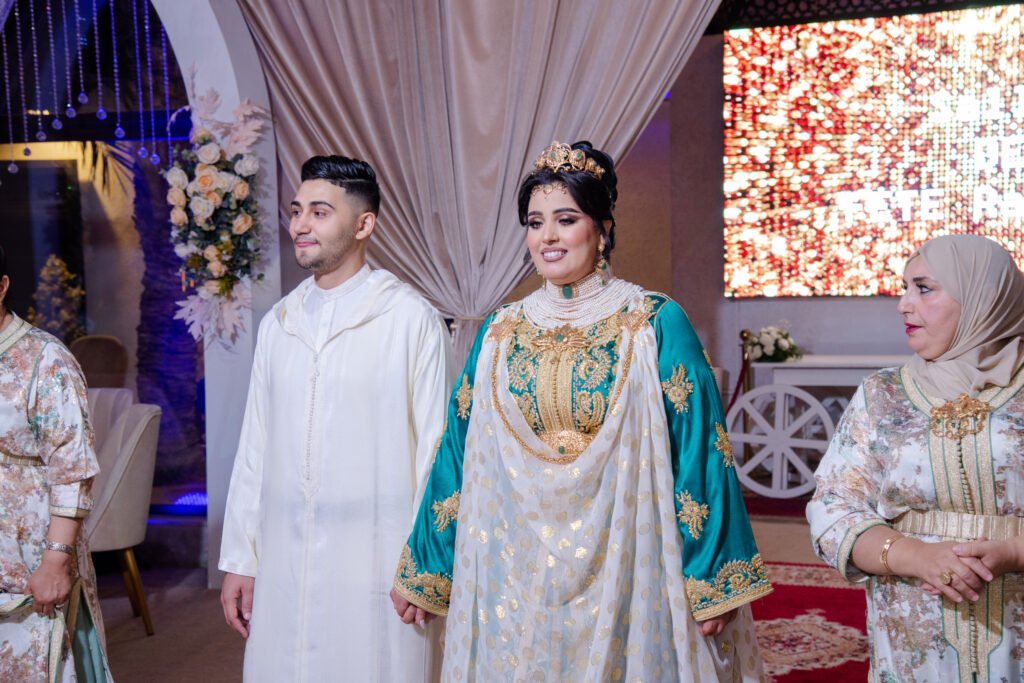
The Amaria is one of the most recognisable moments associated with many Moroccan weddings.
The bride — and in some celebrations the couple — may be elevated above the guests during a ceremonial entrance accompanied by music and celebration.
The exact timing varies.
It may occur relatively early in the wedding or be incorporated later depending on the programme.
Our guide to Moroccan wedding traditions in Marrakech explores traditional entrances and other ceremonial elements in more detail.
From a scheduling perspective, the important point is coordination.
The styling team, musicians, photographers, videographers and wedding planner should all know when the entrance is expected to begin.
The First Bridal Look
The bride’s first Moroccan look often establishes the visual direction of the celebration.
The garment, jewellery and ceremonial presentation should already be prepared before she enters.
Depending on the wedding, this may be a caftan, takchita or another bridal presentation selected for the moment.
The bride should also have enough time to actually enjoy wearing the look.
If she changes again immediately afterward, the first appearance can feel rushed.
This is why the number and timing of bridal transformations deserve careful planning.
Dinner and Bridal Changes
Dinner can provide a natural opportunity for certain bridal changes.
However, the change should still be timed around the wedding programme.
A complete transformation may involve:
- Removing the previous garment
- Changing jewellery
- Adjusting the hairstyle or headpiece
- Preparing the next caftan
- Checking the final presentation
- Coordinating the next entrance
This can take longer than couples initially expect.
Trying to include too many transformations can leave the bride absent for significant portions of the celebration.
The strongest wedding timeline balances the beauty of Moroccan bridal tradition with the bride’s ability to remain present with her guests.
How Many Bridal Looks Should Be Included?
There is no correct number.
Some brides prefer several transformations.
Others select only one or two Moroccan looks.
The decision should depend on:
- Wedding duration
- Ceremony structure
- Bride’s preferences
- Guest experience
- Photography
- Venue
- Entertainment programme
- Comfort
More looks do not automatically mean a more luxurious wedding.
Thoughtful Moroccan bridal styling in Marrakech is about creating the right progression rather than simply increasing the number of garments.
Music and Entertainment
Music can guide the energy of the evening.
Traditional performances may accompany particular ceremonial moments, while other parts of the celebration move toward contemporary music and dancing.
The schedule should leave enough flexibility for the atmosphere to develop naturally.
Not every minute needs to be programmed.
In fact, overly strict timing can make a wedding feel mechanical.
The purpose of the timeline is to protect important moments while still allowing the celebration to breathe.
Bride and Groom Styling Changes
The groom may also change during the celebration.
For example, he might alternate between traditional Moroccan clothing and a suit or tuxedo.
His transformations can be coordinated with important couple appearances without requiring him to change every time the bride does.
Couples can read our guide to Moroccan groom styling in Marrakech for more ideas on creating visual harmony between both partners.
If both bride and groom plan several looks, the timing should be considered together.
This avoids unnecessary periods where one or both members of the couple are away from the celebration.
Cake, Speeches and Family Moments
International wedding traditions can easily coexist with Moroccan ones.
Couples may include:
- Cake cutting
- Speeches
- First dance
- Family dances
- Toasts
- International ceremonial customs
These elements can be placed naturally around the Moroccan wedding programme.
There is no need to choose between a Moroccan wedding and an international wedding format.
The challenge is simply ensuring that both are given enough space.
For mixed-cultural couples, this can create a celebration that genuinely represents both families.
Dancing and the Later Celebration
Once the main ceremonial moments, dinner and important transformations are complete, the wedding can move into a more continuous celebration.
At this stage, couples often want fewer interruptions.
Music and dancing may become the focus while guests enjoy the remainder of the evening.
This is another reason to avoid placing every bridal transformation late in the schedule.
Finishing the more structured elements earlier can allow the final part of the wedding to feel spontaneous and relaxed.
What Should the Wedding Planner Coordinate?
For larger weddings, the planner typically maintains the overall timeline.
This may involve coordination between:
- Venue
- Catering
- Musicians
- Entertainment
- Photography
- Videography
- Bridal styling team
- Negafa
- Décor
- Transportation
- Family representatives
The Negafa or bridal styling team has a particularly important role around the bride’s preparation and transformations.
The wedding planner needs to understand how much time these moments require.
Communication between the two teams reduces delays and protects the overall rhythm of the event.
Build Flexibility Into the Timeline
A wedding timeline should guide the celebration, not control every second of it.
Photography may take slightly longer.
Guests may arrive late.
A bridal transformation may require additional time.
A family moment may develop naturally and deserve to continue.
A good schedule includes enough flexibility to absorb these changes without affecting the entire evening.
This is particularly important for weddings involving several ceremonial and styling elements.
A Sample Flow for a Moroccan Wedding in Marrakech
Every wedding is different, but a celebration might develop approximately like this:
Before the wedding day: Henna or welcome celebration.
Wedding afternoon: Bride and groom preparation, photography and venue preparation.
Guest arrival: Welcome and gathering.
Early evening: Couple or bridal entrance.
Ceremonial period: Moroccan traditions, Amaria or selected traditional moments.
Dinner: Dining combined with entertainment and selected bridal changes.
Later evening: Additional couple appearances, cake or international traditions.
Final celebration: Dancing, music and a more relaxed atmosphere.
This should be treated as inspiration rather than a required schedule.
The final programme should always be designed around the actual couple.
Creating a Wedding Timeline That Feels Natural
A beautiful wedding is not remembered because every event happened at an exact minute.
It is remembered because the experience flowed naturally.
The couple had time to enjoy it.
Guests understood the rhythm of the celebration.
Traditions were given the space they deserved.
And the wedding never felt like a checklist.
Arouss Marrakech approaches Moroccan weddings through both the visual and ceremonial experience, allowing bridal styling, Negafa expertise and traditional moments to integrate into the wider celebration.
Explore our Experiences to discover the Maison’s wedding and styling services.
View the Arouss Marrakech Gallery for selected ceremonial moments, bridal looks and celebrations.